
Charles Stadden and Edward Suren were both superb sculptors and historians, contemporaries throughout the post war years in London. In many respects they epitomised the spectrum of English makers of their era. Stadden was a perfectionist, his military paintings and figures accurate depictions of uniforms throughout the ages, especially of the British army and its foes. Suren was flamboyant, and his work equally flamboyant, his figures having flair and style, whereas Staddens’ were muted and formal. Here I am showing these differences in one specific era; the late 17 century. In England, Charles the Second had been invited to take up the throne his father had lost his life for. On the continent the eastern and central states and kingdoms were being threatened once again by the Ottoman Empire. Charles Stadden produced a lovely set of 54mm figures depicting the birth of the British Army. Edward Suren produced equally lovely figures depicting the famous winged hussars that turned the tide at the siege of Vienna. Both from the same era. These figures to show the different but equally beautiful styles of these great artists.
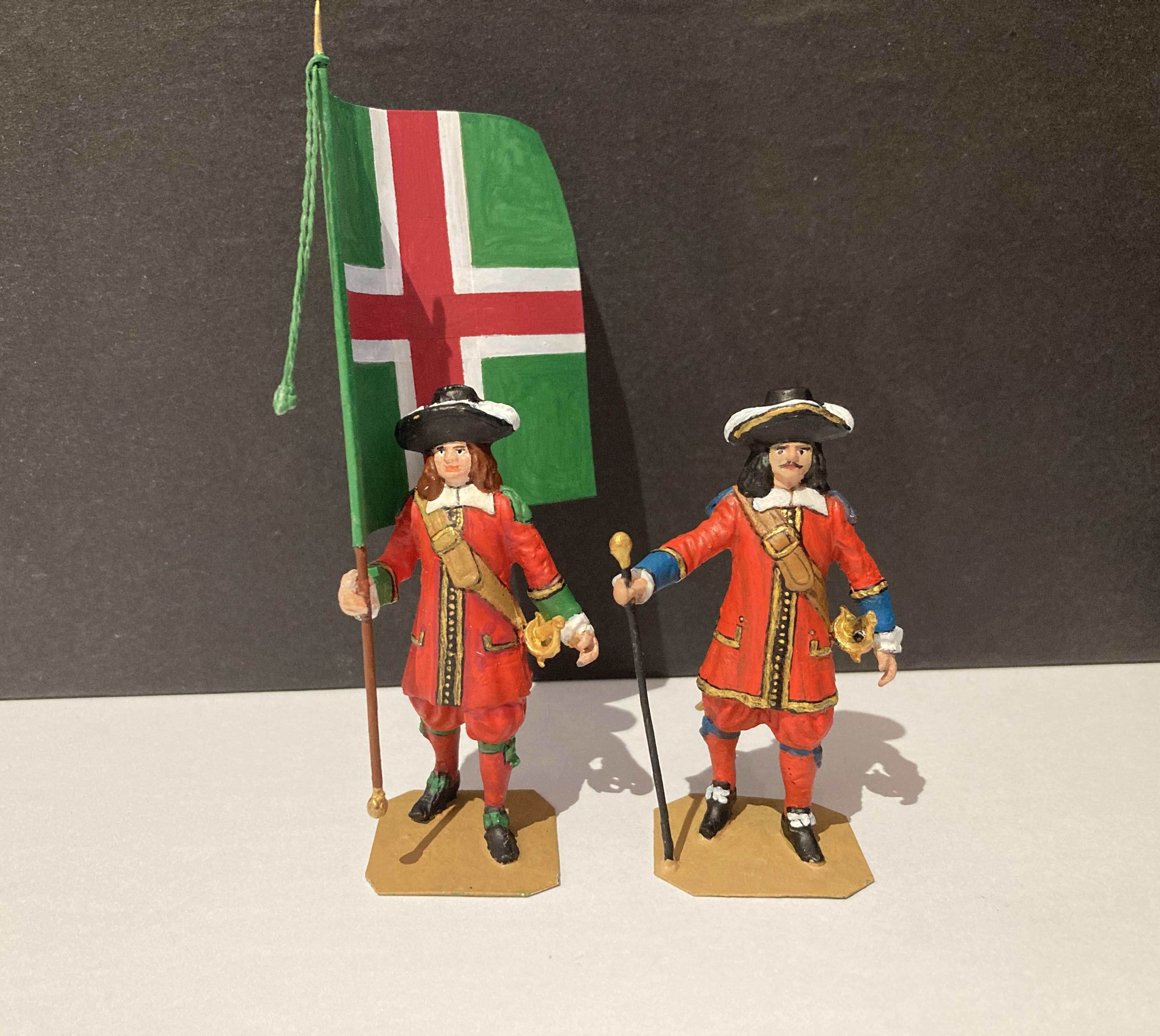
On the left are two Officers; an Ensign and Senior Officer of different guards regiment of approx 1660 to 1670 by Charles Stadden. Coldstream Guards and 1st Foot Guards. Accurate information on these regiments is difficult to authenticate because changes were frequent, both in the dress, weapons and overall tactics. During this period up to the end of the century, national armies were developing, with consistency of uniforms and weapons.
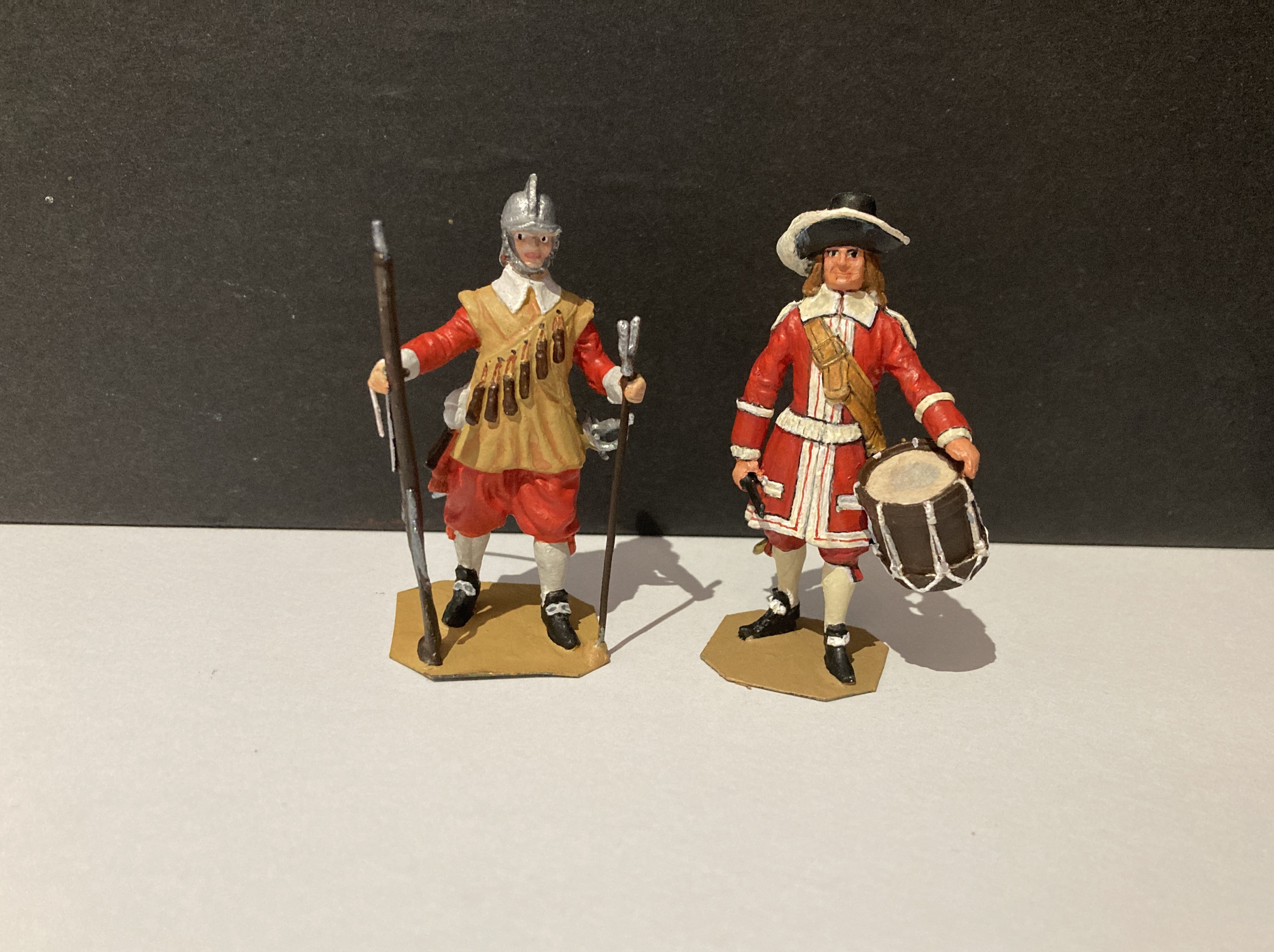
On the right are two more Staddens, both Guards regiments. One a drummer and the other a musketeer. The musketeer still much as he would have looked in the recently disbanded New Model Army. Within a decade or so firelocks would have replaced the heavy old muskets and rests and the 12 apostle bandoleers would be redundant.
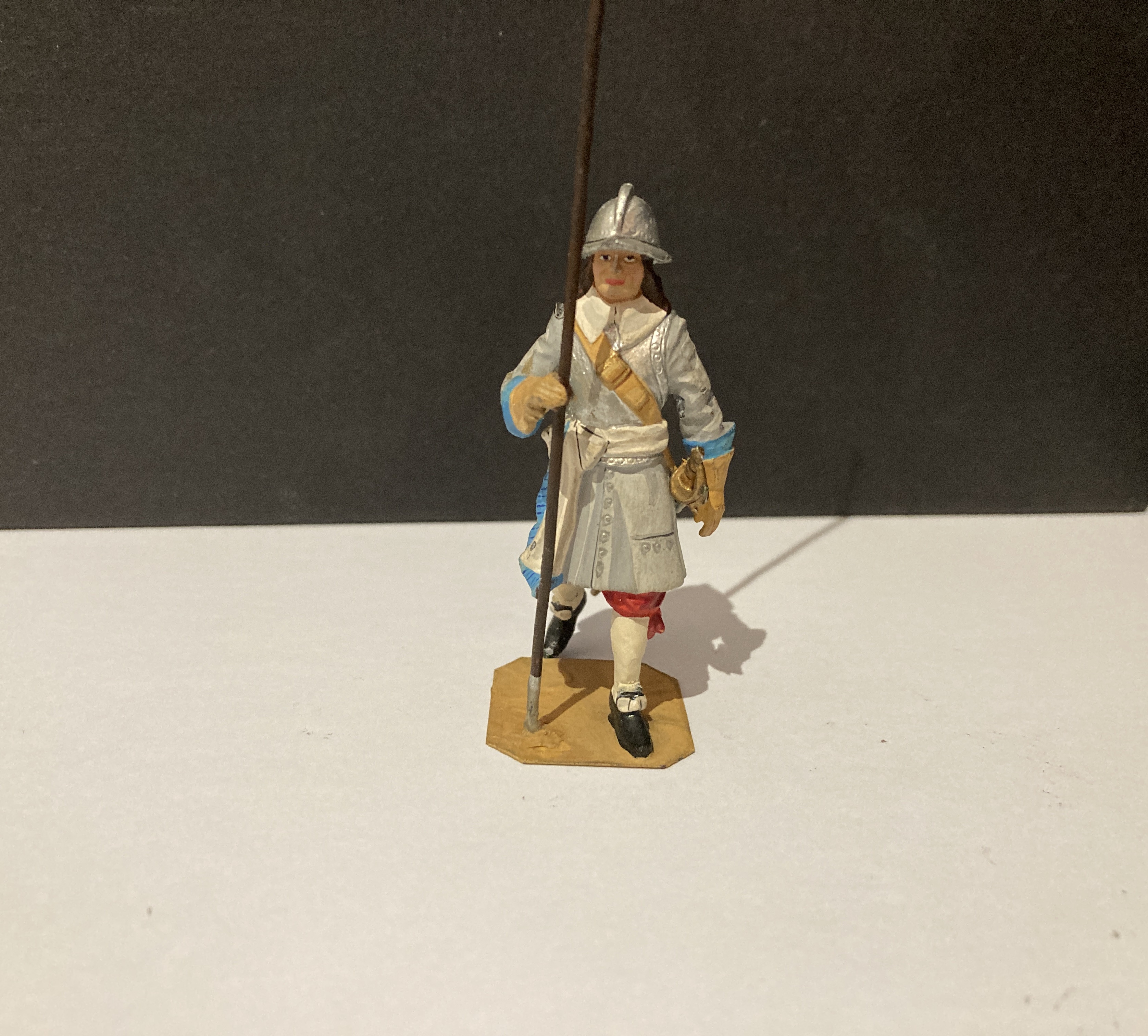
Finally, the last Stadden in this range; the pikeman. Again very reminiscent of those who preceded him in the English Civil War. And again, within a decade or so to disappear from the ranks of all armies as weapons and tactics changed. This was a turning point in warfare and changes were beginning that were to continue and last for at least a century. It is a seminal point in English military history and one that is often ignored.
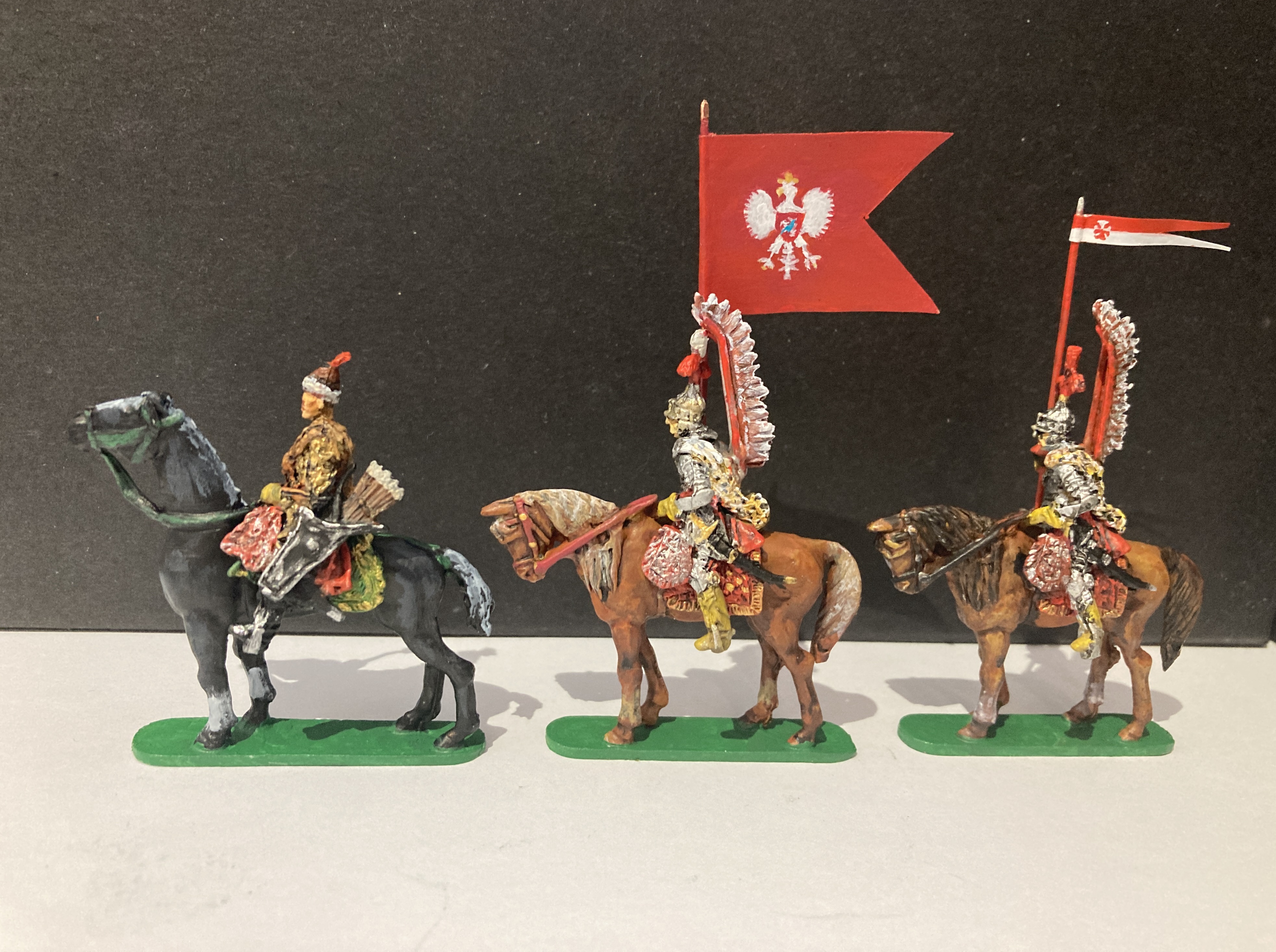
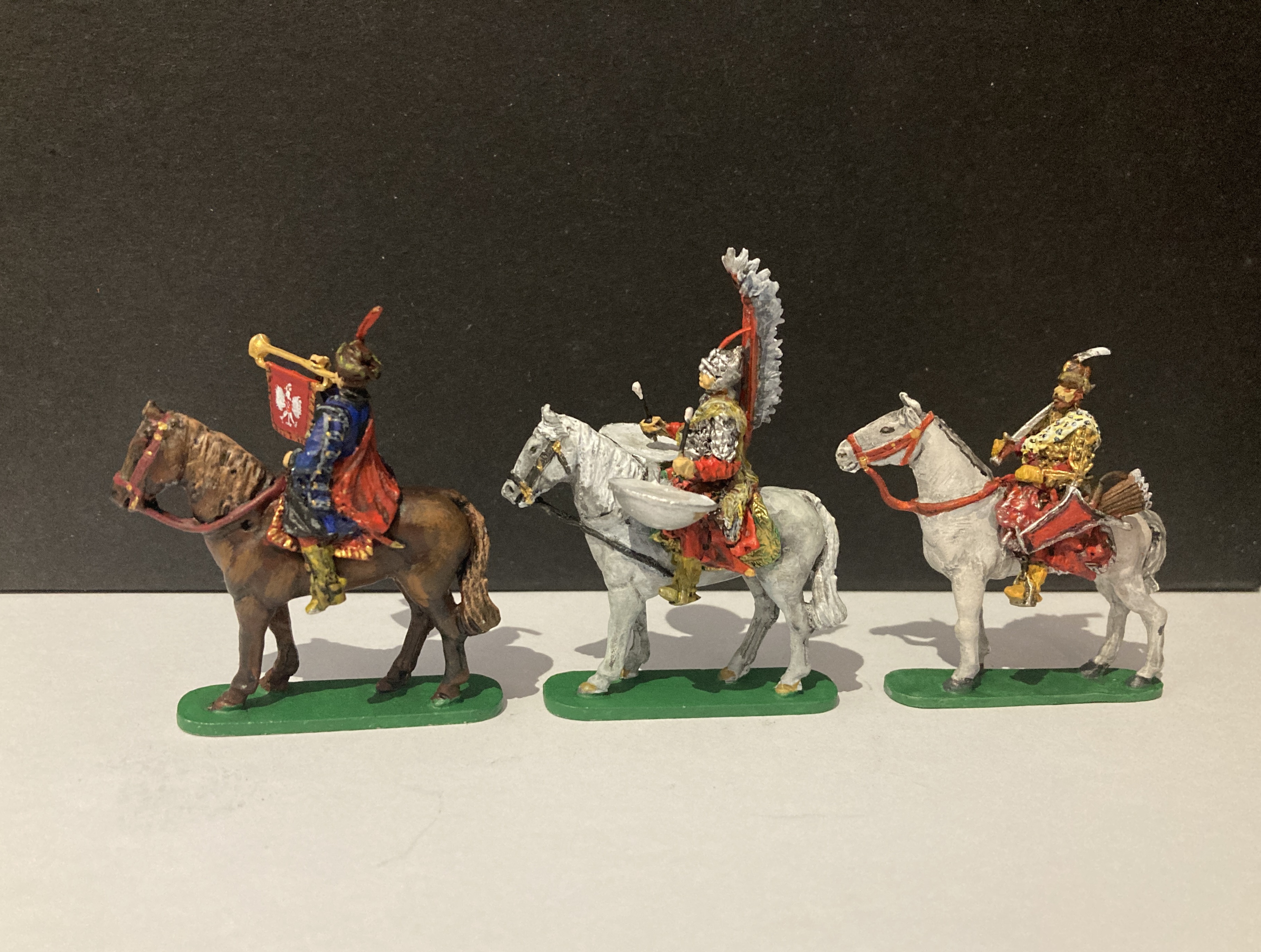
Now we move on to Edward Suren. The examples I’ve chosen are his depiction of the famous Polish Winged Hussars, almost at the end of their era and contemporary to the above figures. It was a great moment in their history, one of the finest cavalry charges. However, unlike foot soldiers, cavalry adapted and survived; heavy cuirassiers were vulnerable to better firearms and massed volleys but didn’t disappear. Lancers went in and out of fashion throughout the next hundred years and more, and became less armoured. I’m no expert so make what you want of that. Suren made a great job of them in his iconic 30mm ‘Willie’ range. On the right are a selection of Suren Winged Hussars. I had a large group of these and recently found some of them. Here are examples. Suren’s horses were not great though.
 Jim's Vintage Toy Soldiers