
From 1798 to 1801 a French expeditionary army under Napoleon conducted a campaign to bring Egypt under French domination. There were many reasons why this was considered vital to the French revolutionary government of the time, follow this link to find out more. My fascination in this campaign is multi-layered and its importance to the spread of oriental culture to Europe was immense. For this post I am concentrating on figures depicting the unique uniforms worn by the French army in Egypt. In other posts I’ve mentioned the fine 54mm figures sculpted and sold mainly in the 1970’s by John Tassel under his Lasset alias. Although his figures do not have the flair of Hinton Hunt they are more defined and correct; perfect for those who wanted models where the uniform is centre of attention. Facially, all figures are almost identical and each casting is individually hand finished and posed. Nothing detracts from the painting of the uniform. Lasset figures are beautiful, and those few sold painted by his small team of women painters, especially Jean Abel, are magnificent. All the figures shown here have been painted by myself, except for one that I have highlighted; painted by Jean Abel. The first groups of figures in this post are all Lasset’s, then some from other similar makers are shown.
When it first landed the army wore uniforms developed in the revolutionary wars. These were well regarded by the men but unsuitable for the harsh, hot North African environment. Neverless, they wore them until they were patched and falling to pieces. The figures on the right depict the uniforms worn in 1798, including their beloved bicorn hats. The bottom picture shows infantry legere in tall shako’s, different units were drawn from the French Army for this expedition and would have embarked wearing uniforms they were already serving in. Some, even if fundementally the same may have worn slightly different uniforms. I doubt whether any of the uniforms would have been as pristine as these. Lasset’s figures, and many others, were sculpted to show uniforms of the time as perfect as research made possible, not the hodge-podge that soldiers in the field wore in reality, this was left to fellow sculptors such as Hinton Hunt. Everyone has their own opinion of which style best suits their collection.
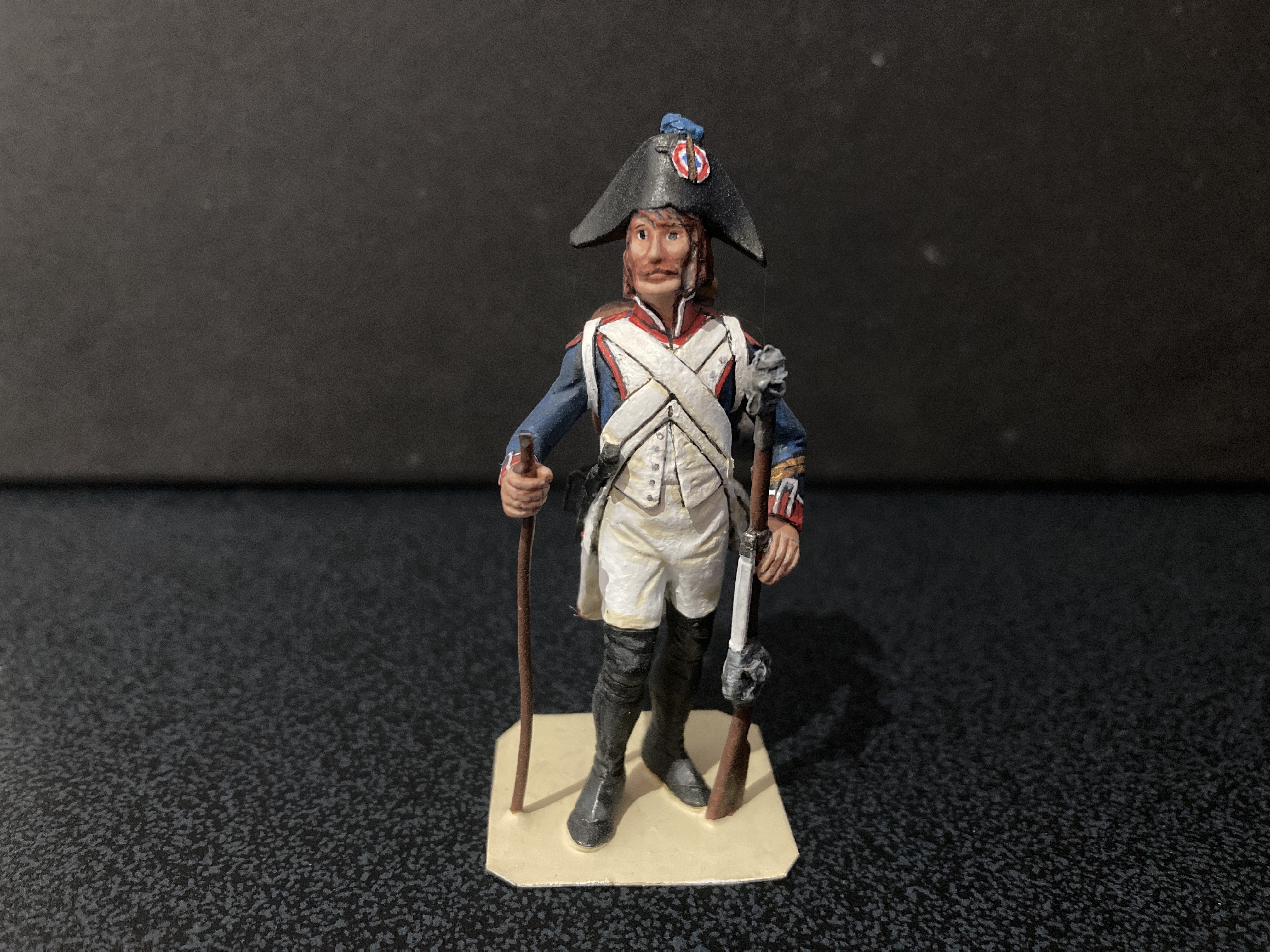
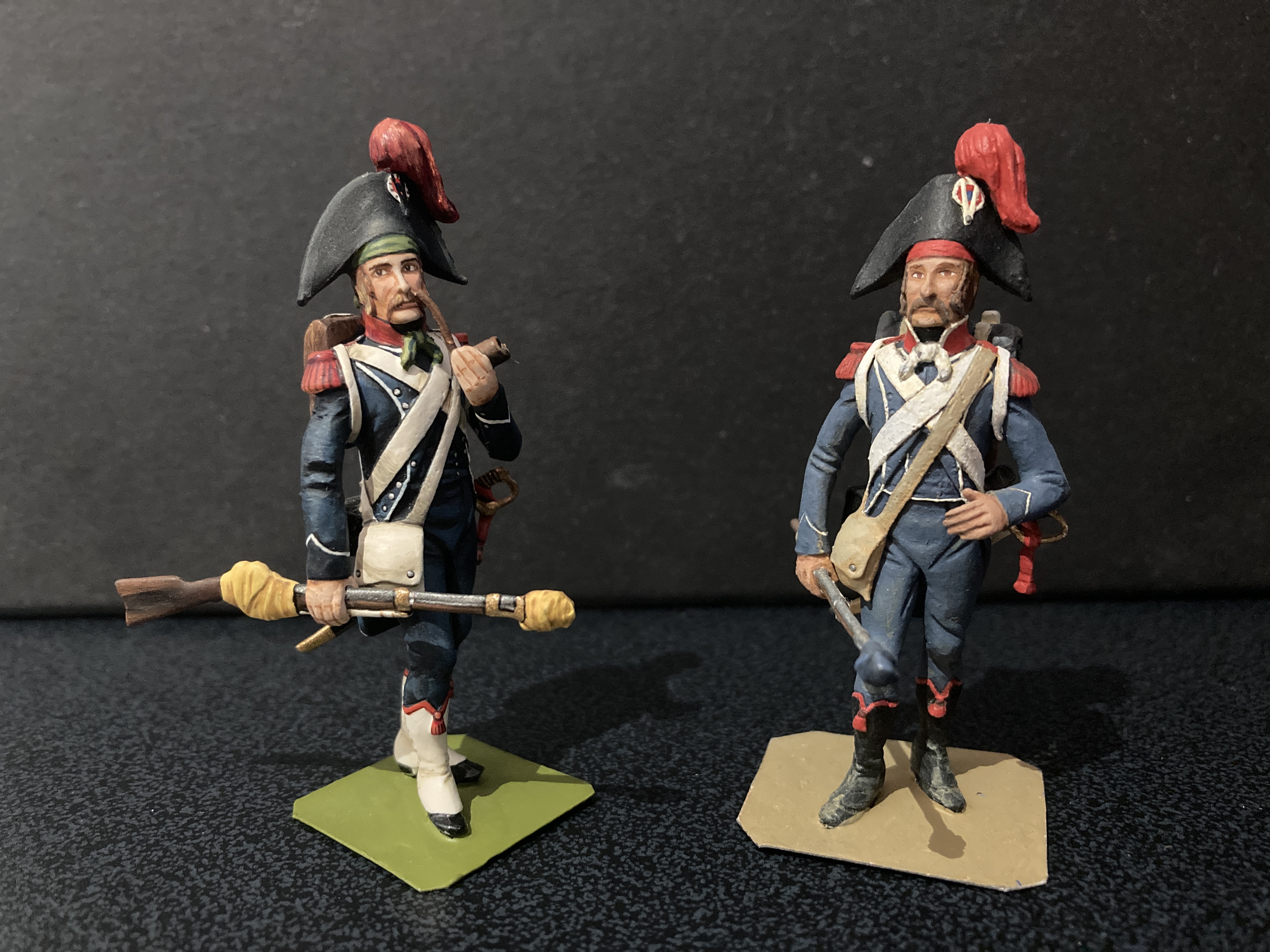
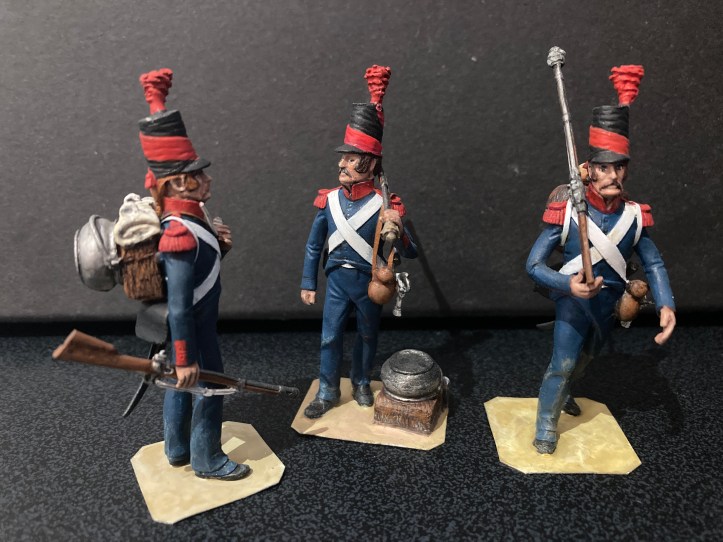
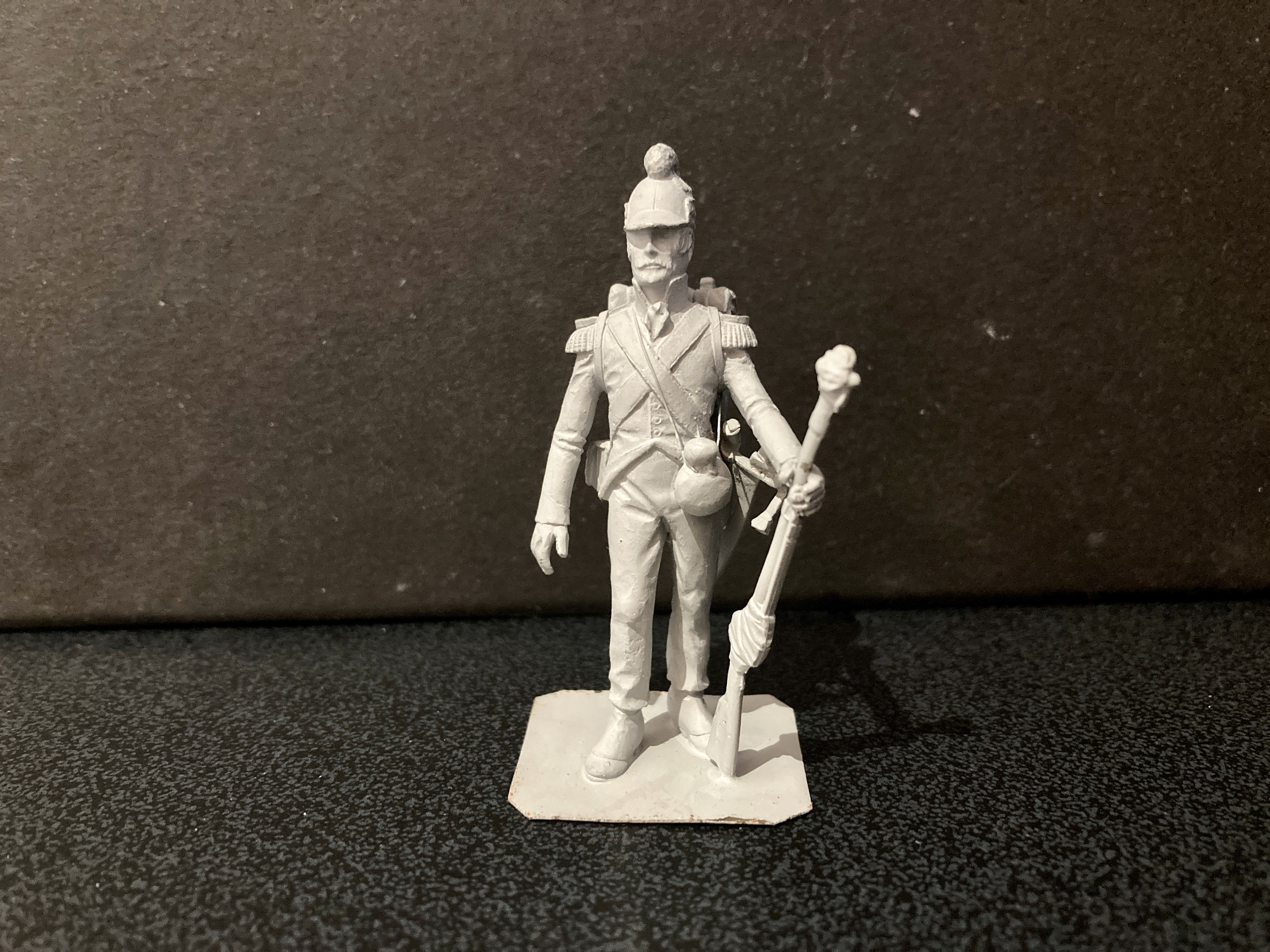
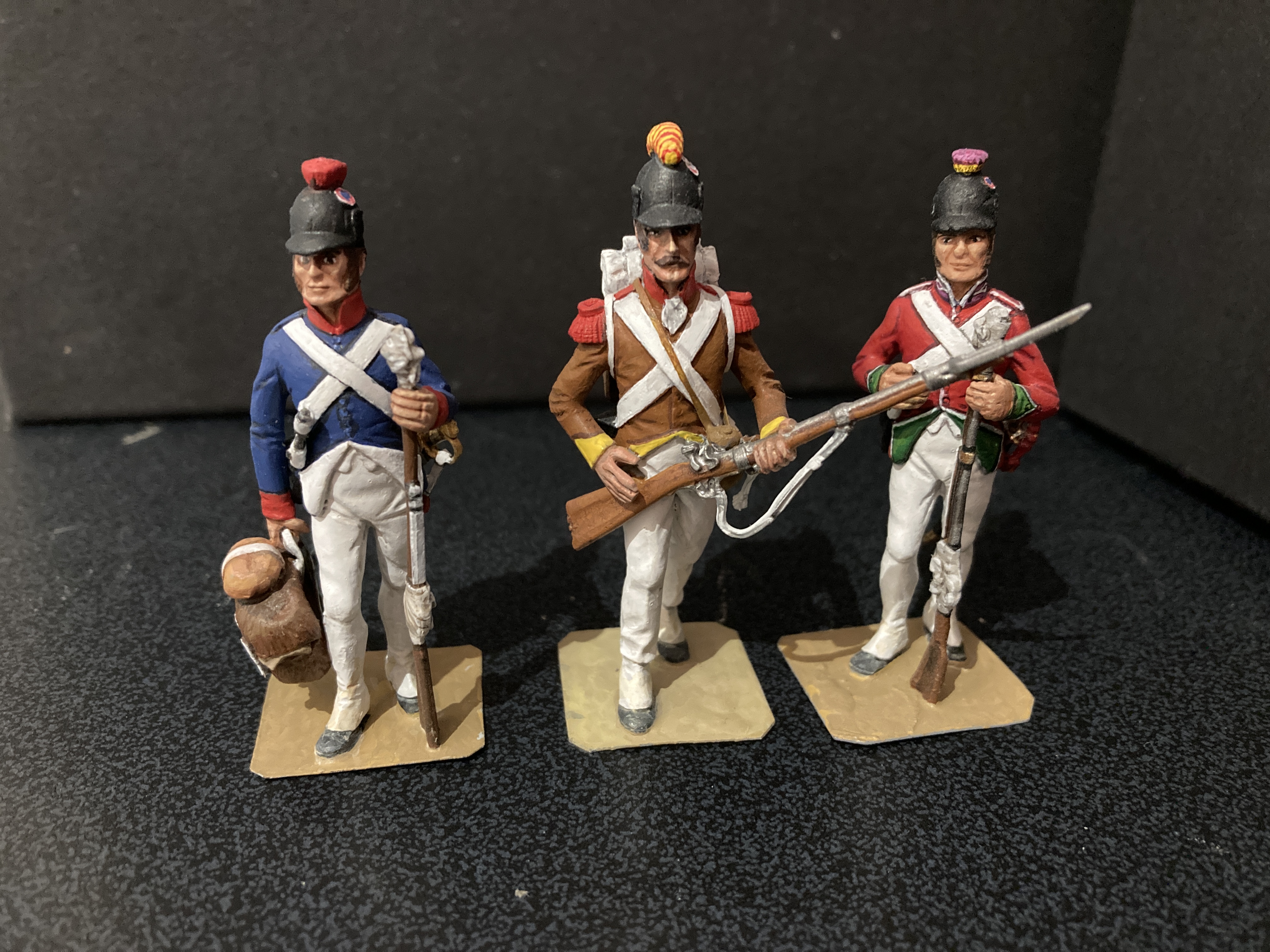
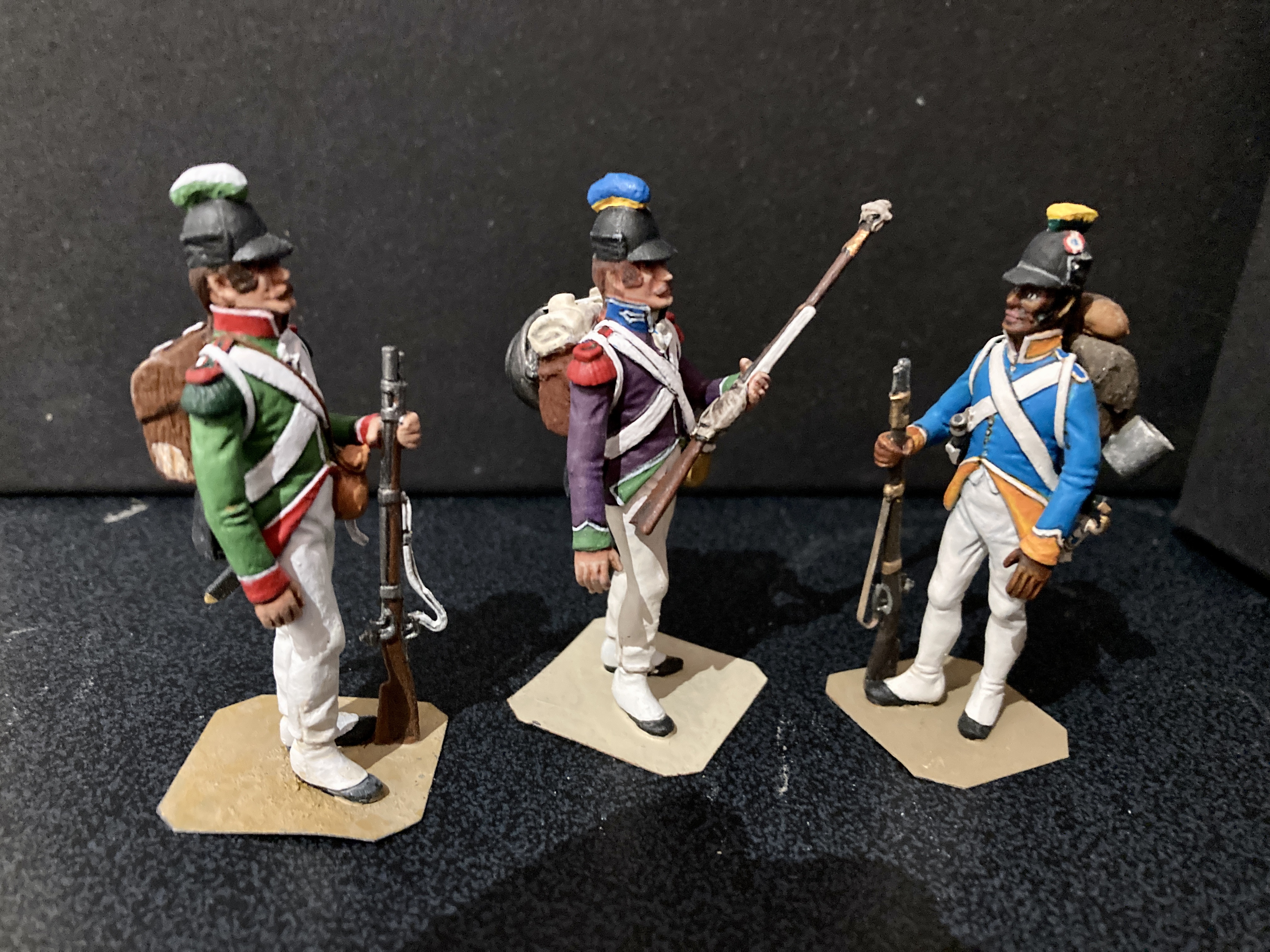
As early as late summer 1798, Napoleon ordered new uniforms more suited to the environment. The most noticable change was the ‘petite casque’ a leather cap style helmet, but also lighter, more comfortable jackets. Unfortunately there was not enough material of any one colour, so each Demi-brigade was issued with different coloured jackets, matched by pom-poms on the caps. Here is where the Lasset figures come into their own, since the general appearance of each unit was similar except for the colour of the uniform. Even then, the colours of the uniforms could change if a new batch was issued. The left hand figure, middle photo, shows the first attempt at change with blue uniforms. Each figure was cast and hand posed, so from just a couple of basic castings a multitude of different poses could be made. On the left are just a few of those I’ve collected and painted, Each is carefully researched and correct for a particular unit at a particular time. Black recruits were not uncommon in the Army of the Orient, indeed many diverse ethnic recruits and full units fought throughout the Naponeonic wars; on land and at sea. It is recorded that there were female casualties numbered amoungst the French at Waterloo; in uniform, not camp followers or cantineers.
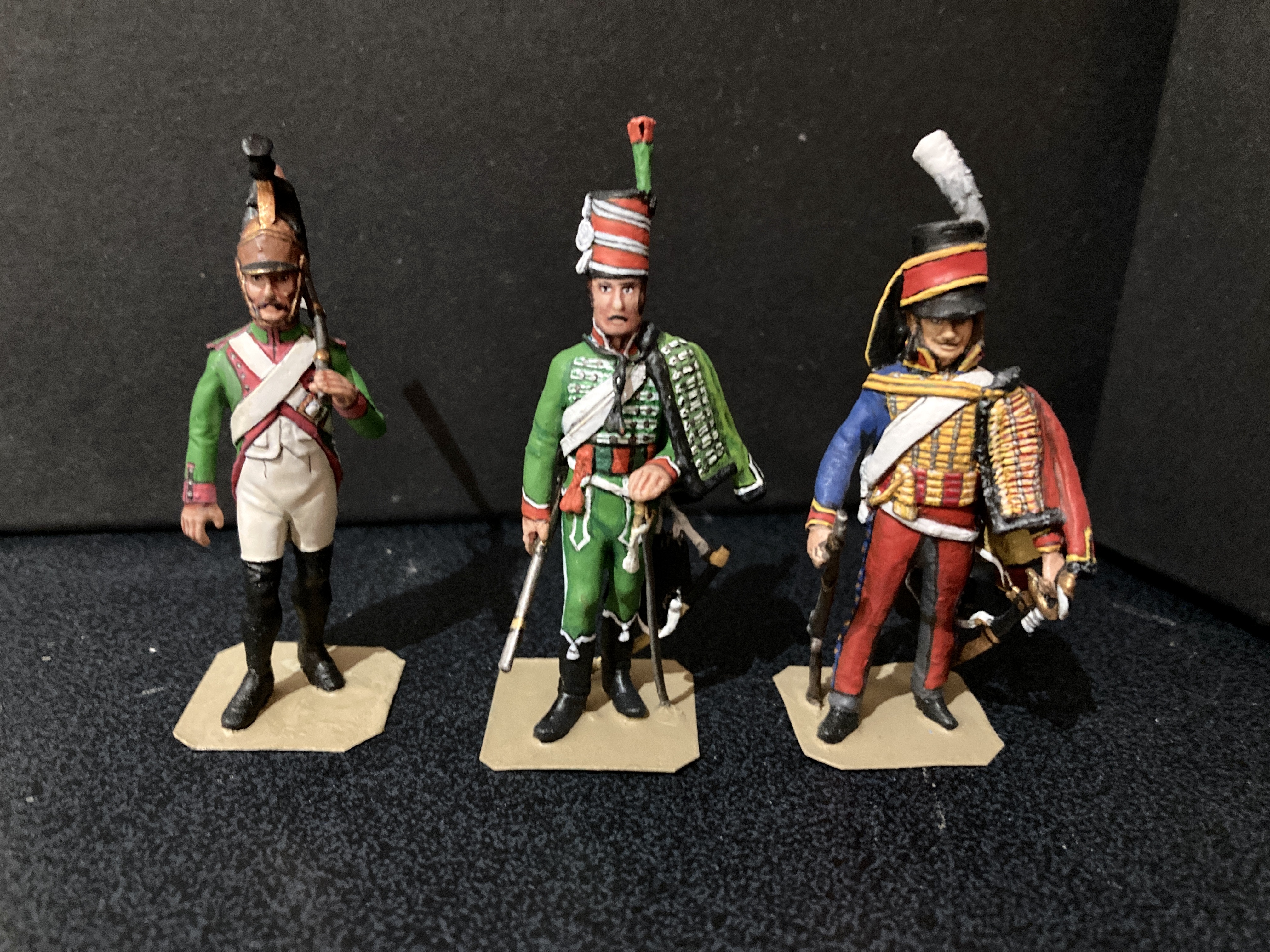
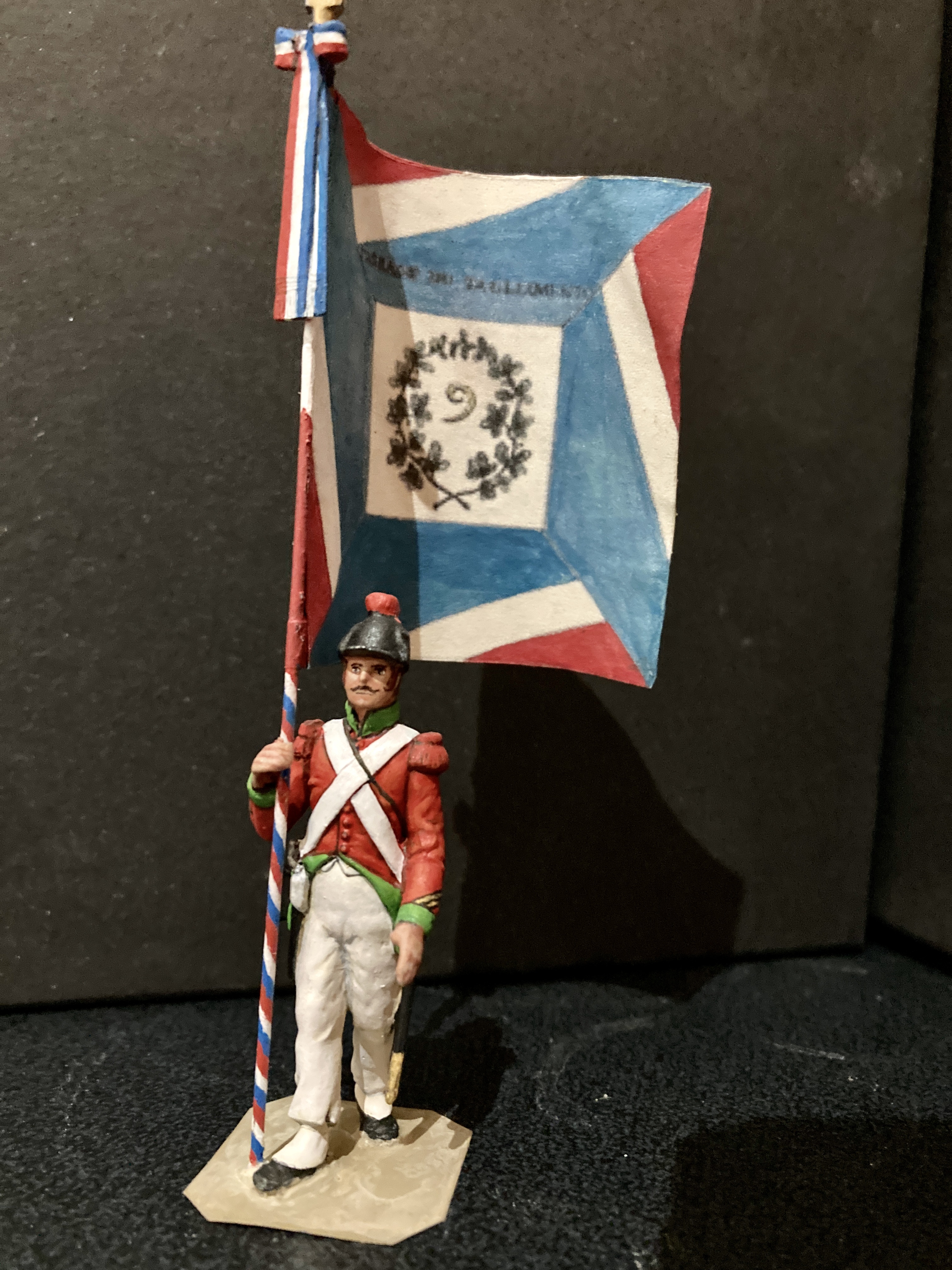
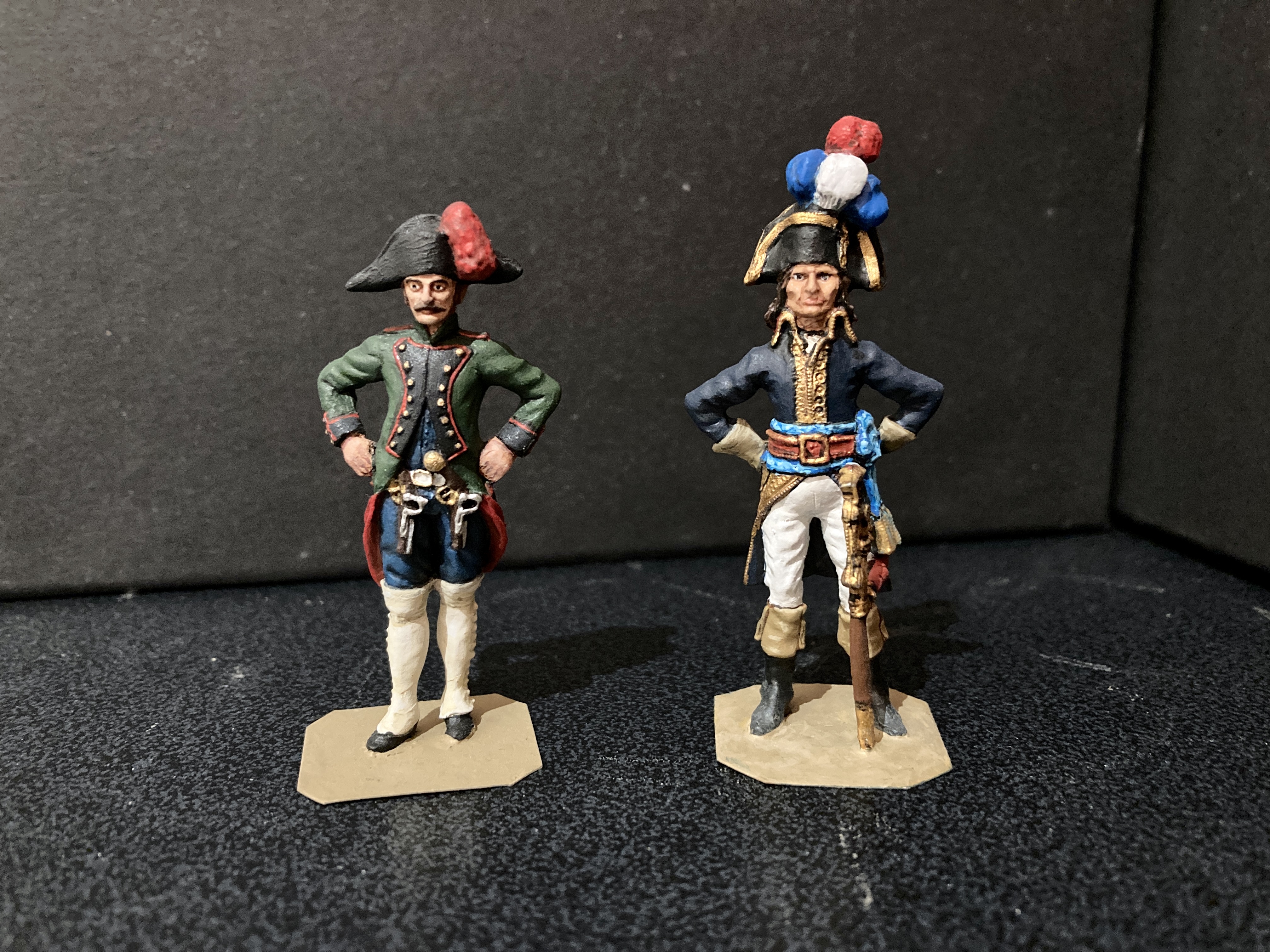
In the first image below we come to the cavalry and dragoons, the Dragoon and 22e Chasseur a Cheval (green uniform) are Lasset, the Hussar of 7ebis is a Stadden. In the middle is the Colour of the 9em Demi-Brigade, and in the last, an Airostier with a General. The Airostiers were a Balloon unit. Unfortunately all their equipement was lost during the disasterous French defeat to Nelson at the Battle of the Nile. The fact that Napoleon had developed such a unit shows how far the French revolutionary army had progressed. Later in the campaign the Airostier uniform was changed to blue with a Petit Casque. I can’t remember the manufactureres the middle and right hand figures, I’ve had them a few years.
I’ve already highlighted Stadden’s superb Dromedary Corps figures in another post. This is a great cameo subject to collect, so I add to it when I find suitable figures. Click once on any image to enlarge.
 Jim's Vintage Toy Soldiers