
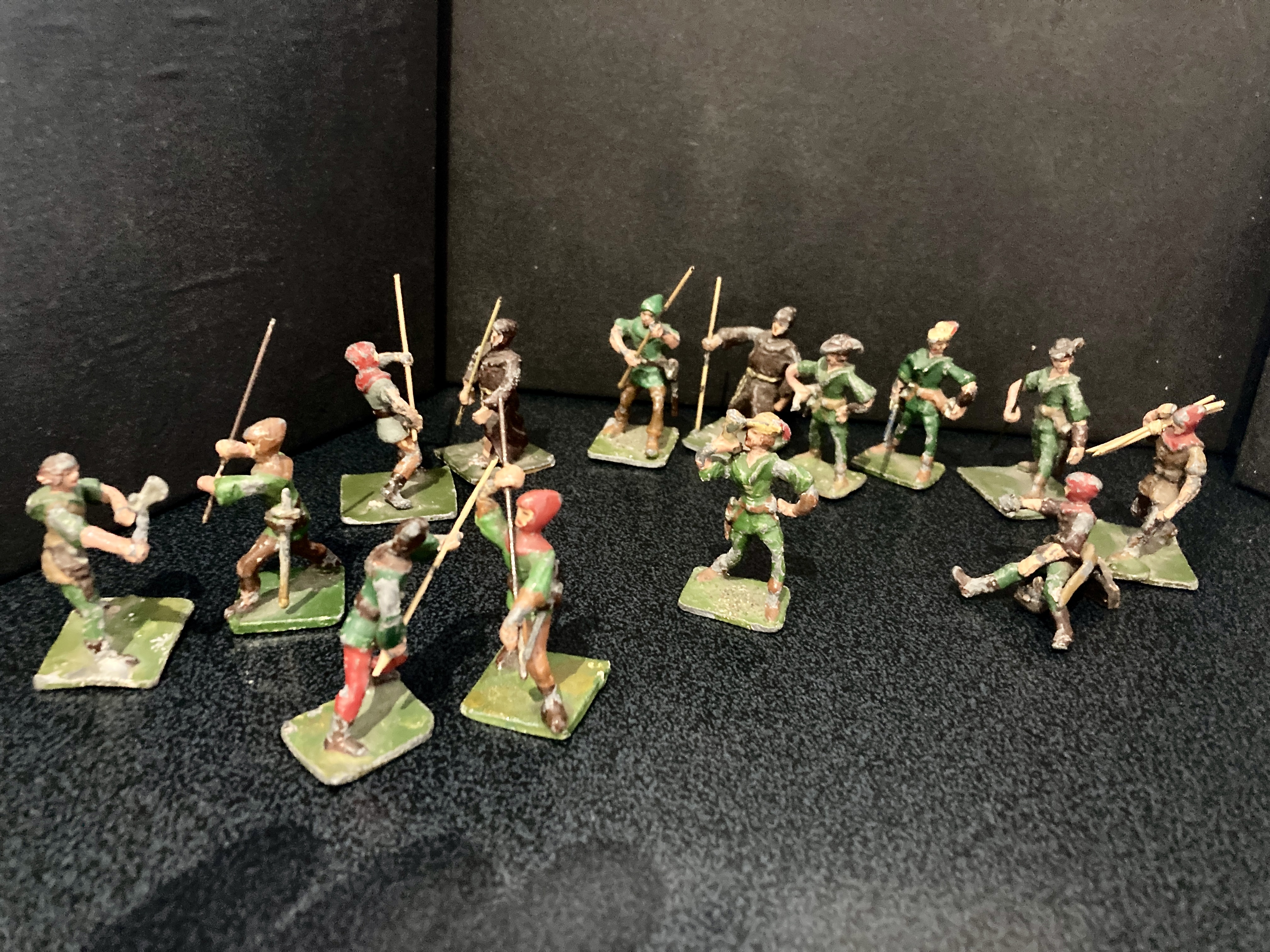
I have just opened this page again to view, I closed it because I was not sure of the exact maker of the 40mm models below. However, I am now sure that the description is right. I have recently found more of them and have added them to the page. I have also now seen an example of these 40mm figures with a label attached proving them to be definitely early Greenwood and Ball, probably late 1930’s. This Robin Hood style of dress now famously associated with the Errol Flynne 1938 film was widely depicted in books from 1900 until after WW2 when medieval clothing other than green tights was deemed more realistic.
I like to have examples of all the great makers of toy soldiers in my collection. Differently from many collectors, I class all types of military miniatures as toy soldiers. I don’t justify this logically, it’s just my choice. Greenwood and Ball fall well into this catagory, because during its life, and under the title of this brand, all sizes and types of figures were produced. In this post I am showing a few examples of their earliest, and in my opinion, best work. I particularly like their very early, often quite crude, 40mm figures, possibly sand-cast, pre WW2. Also a few of their later, post war 50mm figures, that are widely collected and deserve to be; they are stylish and hand-painted to a very high, deceptively simple standard, you can’t confuse these figures with those of any other maker. Much later again, the brand expanded and added figures from other sculptors to their range, now mostly 54mm (or wargame size); whilst these are also very nice, I catagorise those seperately, under the names their sculptors used, such as ‘Olive’ and ‘Lasset’. I will highlight them at another time. Today I am showing Greenwood and Ball original work, after the war sold in the likes of ‘Hummels’, propably the most upmarket toy shop ever, that existed in Burlington Arcade up until the 1970’s. Here you could buy them, for a high price besides the likes of Courtenay knights, Ping figures, early Charles Staddens and Niblett’s beautiful 20mm painted ranges.
Here are examples of the earliest Greenwood and Ball figures I have, 40mm Robin Hood outlaws and knights and men-at -arms to fight them. Although looking crude by todays standards, they are wonderfully posed, reminicent of the style of Courtenay and Ping in miniature.
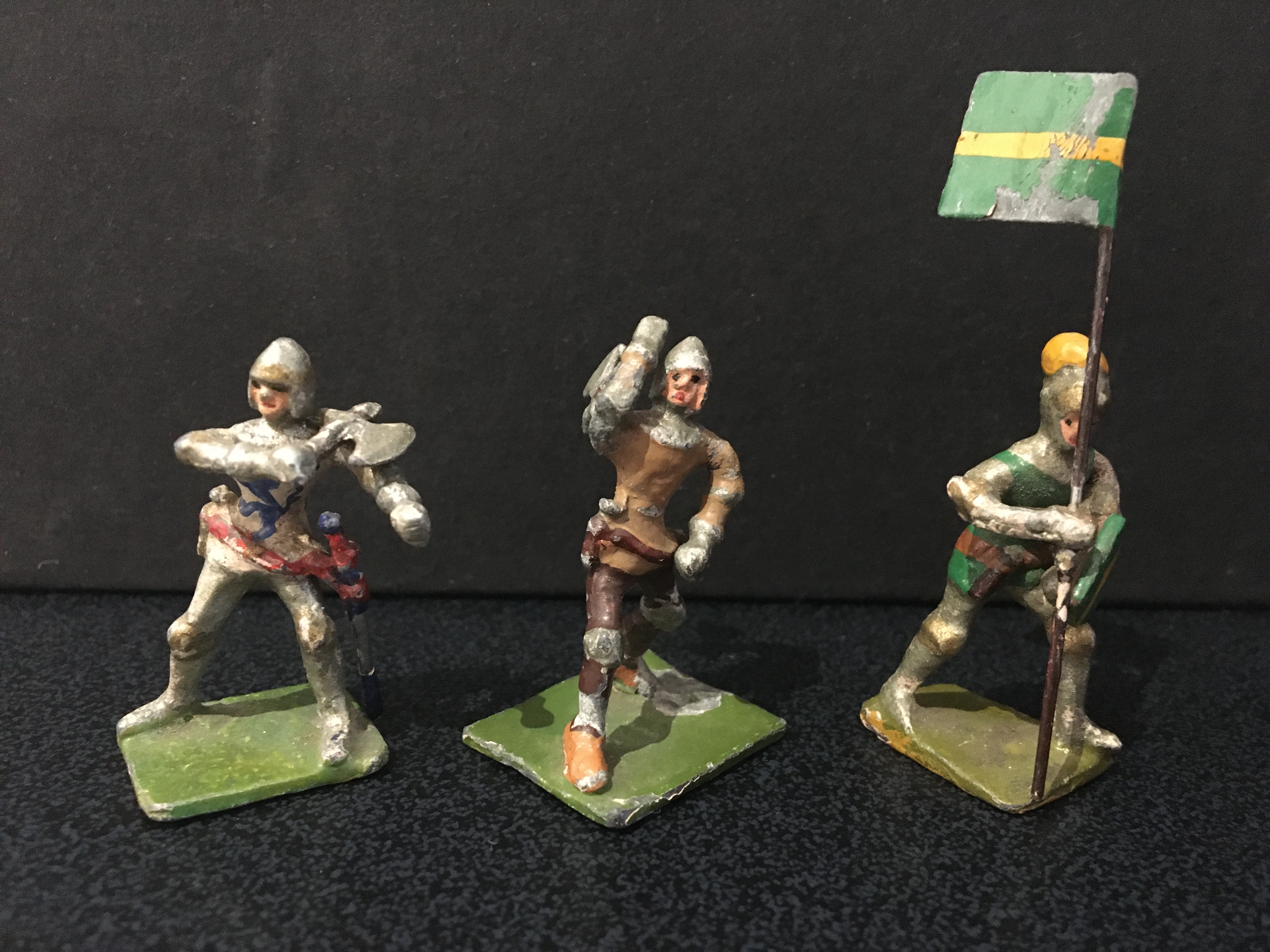
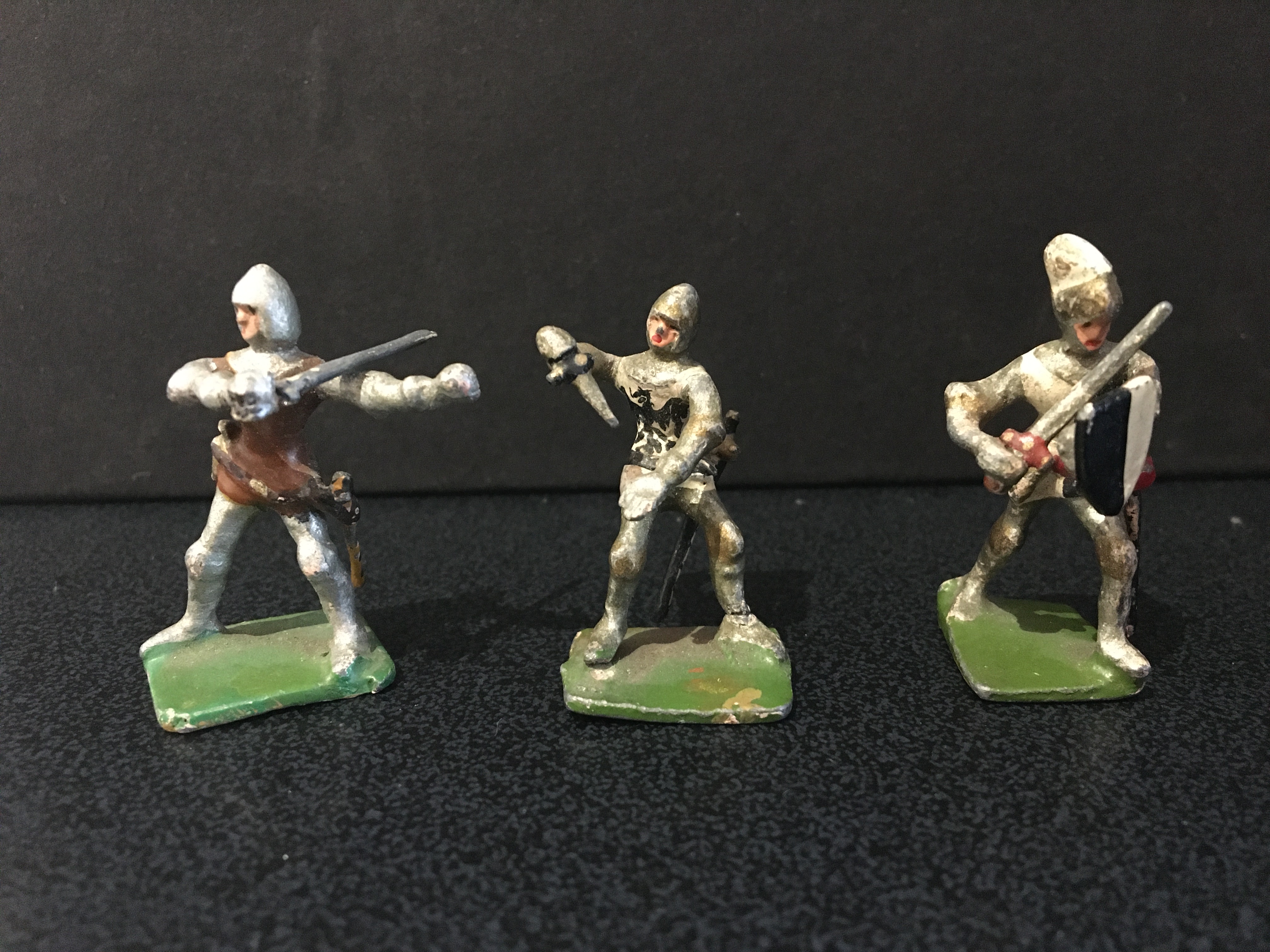
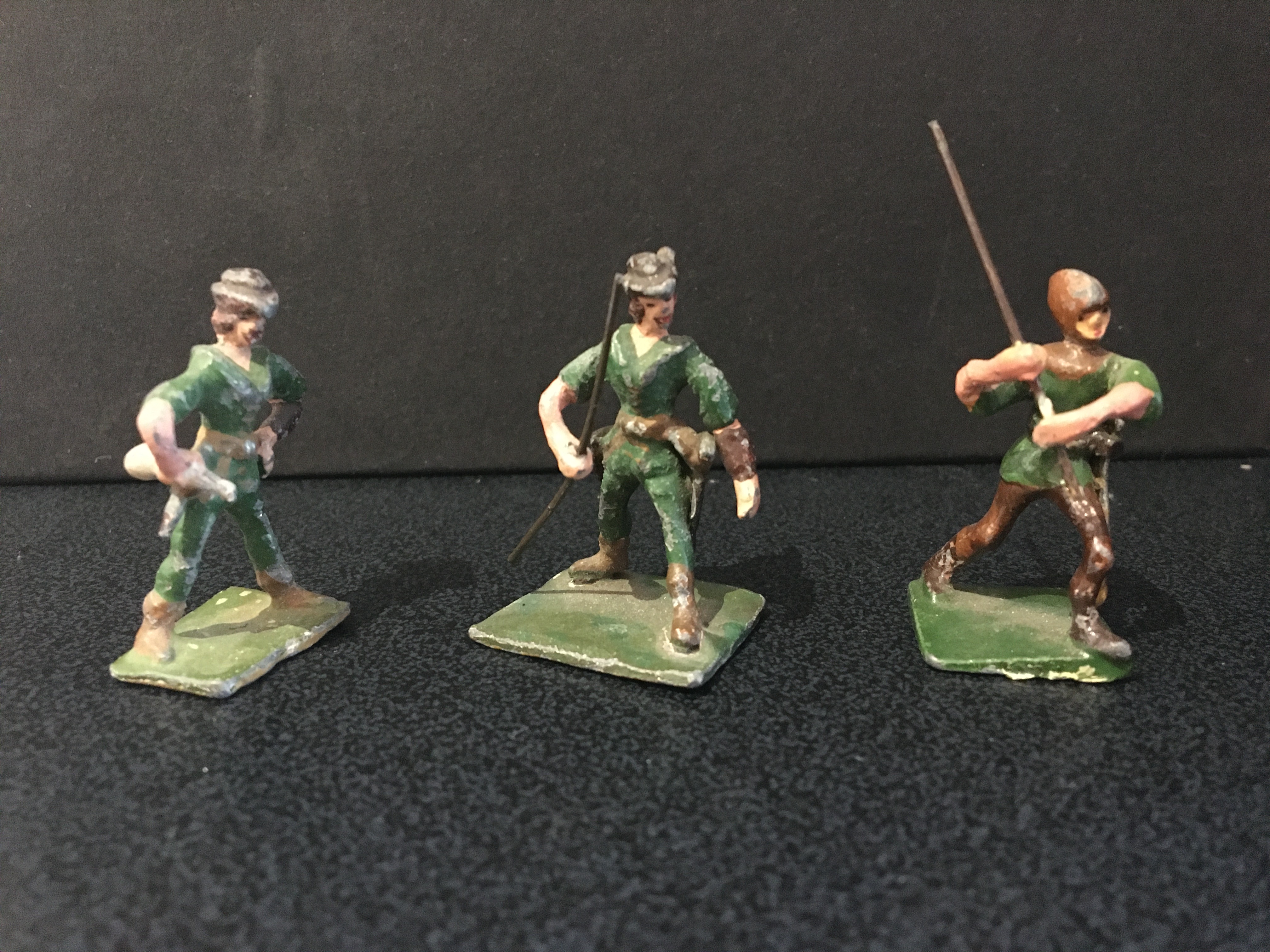
On the left see examples of the 40mm Robin Hood figures.
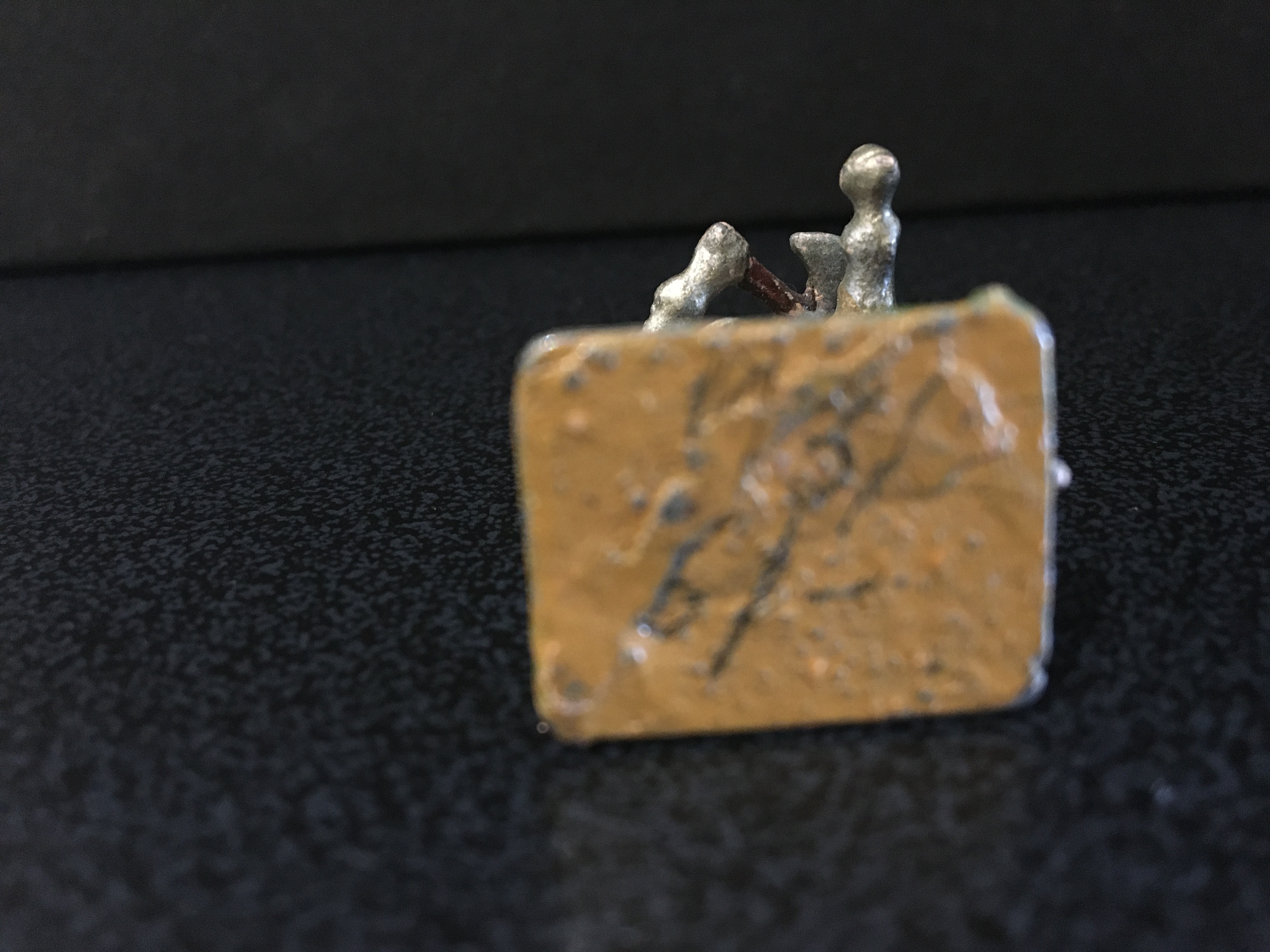
Below is an image of the base of one of the knights. All the figures have the same ochre base paint, and all have similar markings, some are indecipherable, but most seem like this one. It appears to show a number M31 and the cost 6/-; expensive for the time. I am not sure but don’t believe these were still being made after the war, and if so not for long.
And below is the added image; a scene of Robin Hood, Little John, Friar Tuck etc. watching their fellow outlaws practicing with quarterstaffs. I will build a scenic diorama base for these rare little figures one day.
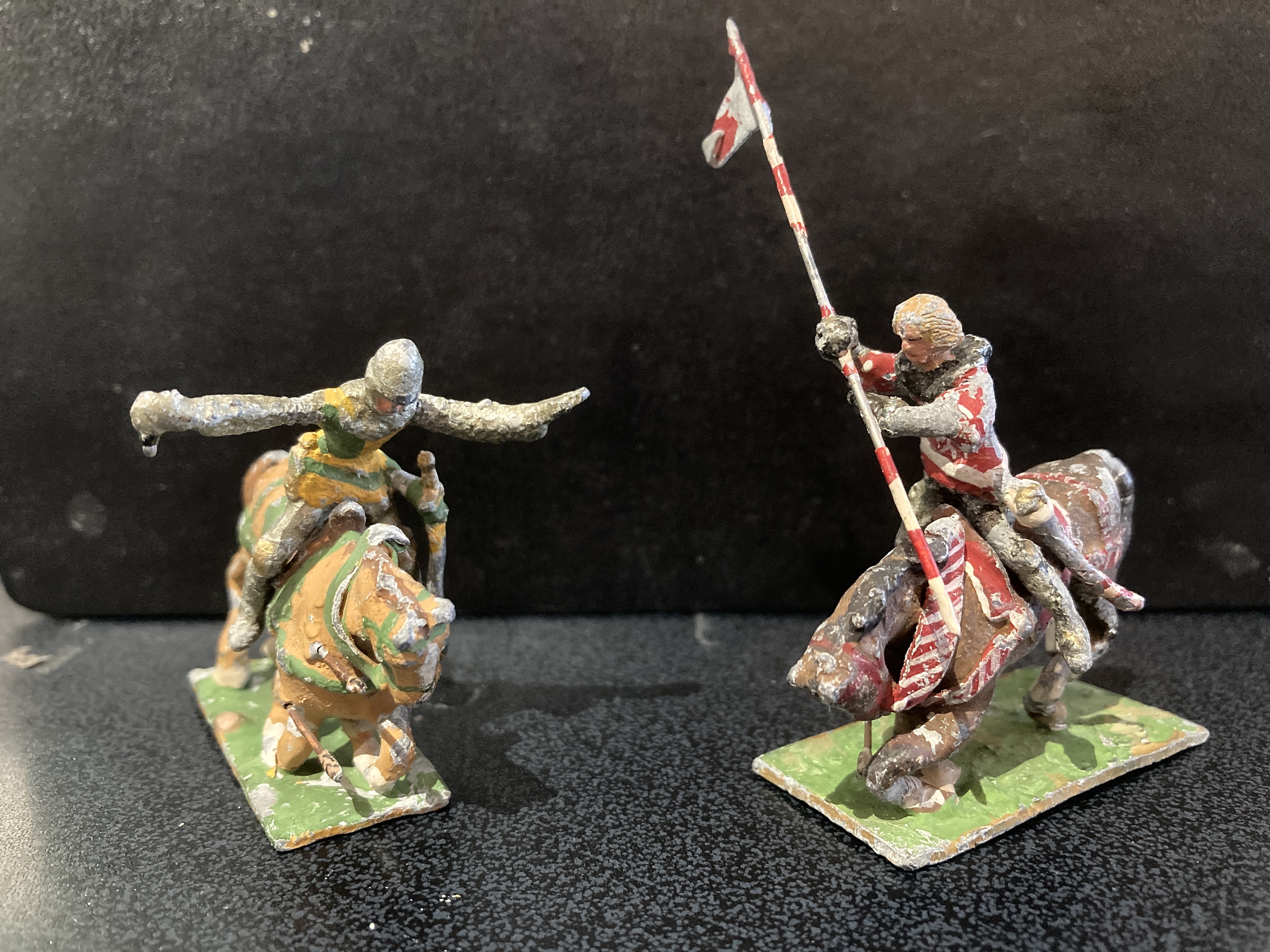
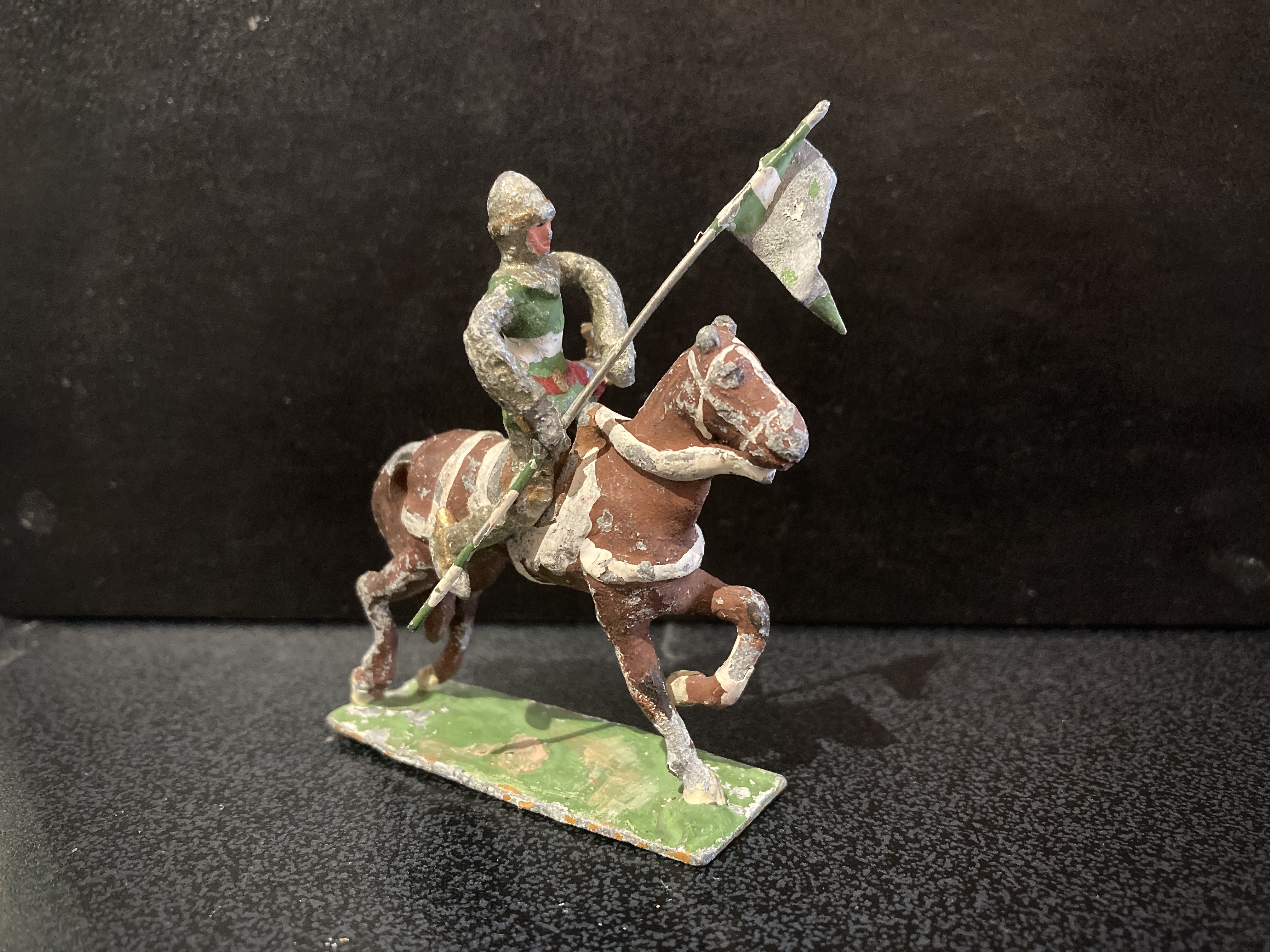
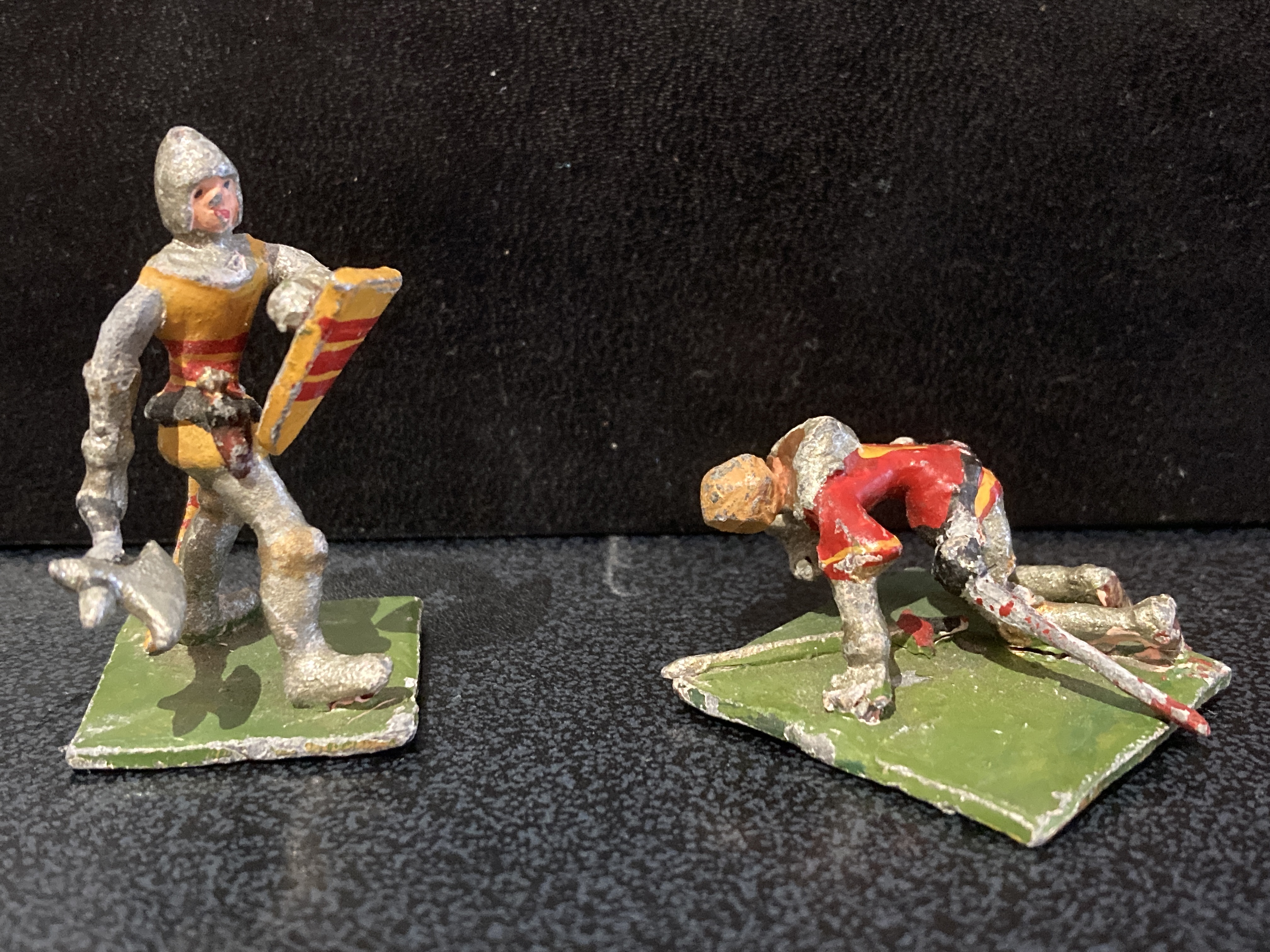
I have now aquired a few more of these figures including some very rare mounted knights. Two are on horses falling forwards; same pose horse, different riders. Notice the horses are shot with arrows! The third is on a trotting horse. Of the two new foot figures, one is a standard knight pose, but the second is a beautifully posed wounded knight on hands and knees, with mail coif pushed back off his head. These figures are soft lead, very worn paint, but I am lothe to renovate them in any way, I could but love them as they are. Click on any image to enlarge, this will show small detail like the arrows in the horses, but these are only 40mm scale figures, cast from soft lead and about 90yrs old, so forgive the condition. Each still has a price written on the base – the mounted ones were sold for 4 shillings and sixpence each. This was a considerable sum in those days. Probably sold in Morells or later Hummels, Burlington Arcade, Piccadilly, London.
 Jim's Vintage Toy Soldiers
James.
What a splendid collection of the early Medieval figures by Greenwood and Ball.
So charming nd nice to see such hugely rare figures, still mostly in original colours too.
I have the Moulds for some later items here (the John TASSEL Medieval Knights) with us in France, which we bought from a now-defunct New Zealand-Australian outlet a couple of years ago.
My wife and I have got most of them now cast up into White Metal. Due to a “unexplained fire” in Australia, some years ago, the previous incumbent “lost” most, well, sniff, nearly ALL of the original Lists and documentation for them.
I’ve re-discovered some from a reproduction 1975 Greenwood and Ball Catalogue Online, but sadly am currently unable to trace all of the various names of the Knights, Lords, Kings, etc, made and then sold by John TASSELL when working for the Balls.
Might you be able to assist us?
Best wishes max and maryse FABRE CHEVALLIER France.
LikeLike
Hi Maxime,
I assume the medieval Lasset figures you describe are the 54mm ones that John Tassell produced and were sold under the Greenwood and Ball name. I have shown some of the Lasset range on this website, I also have some medieval ones; mostly a men-at-arms and crossbowmen.
John designed his medieval figures to depict the development of armour rather than specific heraldry. Most were sold posed and unpainted for collectors to finish, but some were painted by his small team of ladies, principle of whom was Jean Abell, who also painted the beautiful 54mm Greenwood and ball figures. These figures would definitely have been accurately painted to represent actual knights and nobles, but would have been individual figures. All his figures are very distinct with similar features and style. I have seen Stadden, Hinton Hunt and Lasset figures wrongly identified but they are all easy to differentiate to their makers.
I think I know the Australian outlet you mentioned, I also had a very negative experience with them, they bought up a number of moulds from various sources and then tried to sell bad issues from them for high prices. If it is this company I’m glad its gone.
Most of the Lasset 54mm ranges were not really that large, but most figures in them were soldered and posed individually with different weapons ext.
I have a copy of the catalogue you mention and dont think there was another issued much different.
The Napoleon in Egypt post on this website are all Lasset figures and show all the above characteristics. I will post more medieval figures by british makers of the 1970’s soon, including Lasset ones. Hope this helps, its not a definitive answer.
Kind Regards.
James.
LikeLike
Further to my reply, On re-reading I made a mistake, Jean Abell and colleagues were employed my Greenwood and painted G&B figures including Tassels’.
Apologies
James
LikeLike